Best Hokkaido eSIM 2026: Reliable Data From Sapporo to Niseko

Best Hokkaido eSIM 2026: Reliable Data From Sapporo to Niseko

Updated: 2026-07-23 15:58:54

"We're doing our first Hokkaido road trip - Sapporo out to Furano and Biei, then up to Niseko. We keep reading that a lot of the island has poor reception. Which eSIM should we get for Hokkaido, and whose network actually holds up out there?"

Almost everyone planning a trip to Hokkaido runs into this question. The island is vast, sights are often one or two hours apart, and much of that driving takes you through mountains, national parks and thinly populated farmland. Whether your connection holds affects more than navigation and last-minute bookings - on remote stretches of road, it's a safety issue.

This guide covers the essentials: which carrier has the best coverage in Hokkaido, how to choose an eSIM, and what actually separates a local Japanese line from global roaming - plus eSIM and WiFi recommendations for road trips, ski trips and longer stays.

Why your choice of network really matters in Hokkaido

Unlike dense metro areas such as Tokyo or Osaka, Hokkaido spreads its destinations far apart. These common situations all depend on coverage well outside the cities:

  • Road trip navigation: Driving from Sapporo to Furano, Biei, Shiretoko or Kushiro usually means live Google Maps. Lose the signal on a mountain road or farm route and it's easy to miss a turn.
  • Remote destinations: The Shiretoko Peninsula, Lake Akan and Cape Soya are genuinely far out, and reception quality varies a lot on the ground.
  • Ski resorts: Niseko, Rusutsu, Furano and Hoshino Tomamu all sit in the mountains. Summit stations and lift lines are where a network's real coverage shows.
  • Sharing as you go: Uploading lavender fields, drift ice or powder days in real time needs both a stable connection and enough data.

In short: "it works in the city" isn't enough in Hokkaido. What matters is whether you still have signal once you leave town.

Which carrier is best in Hokkaido? Docomo, au (KDDI) and SoftBank compared

Japan has three major carriers, and in Hokkaido's rural and mountainous areas the differences between them are pronounced:
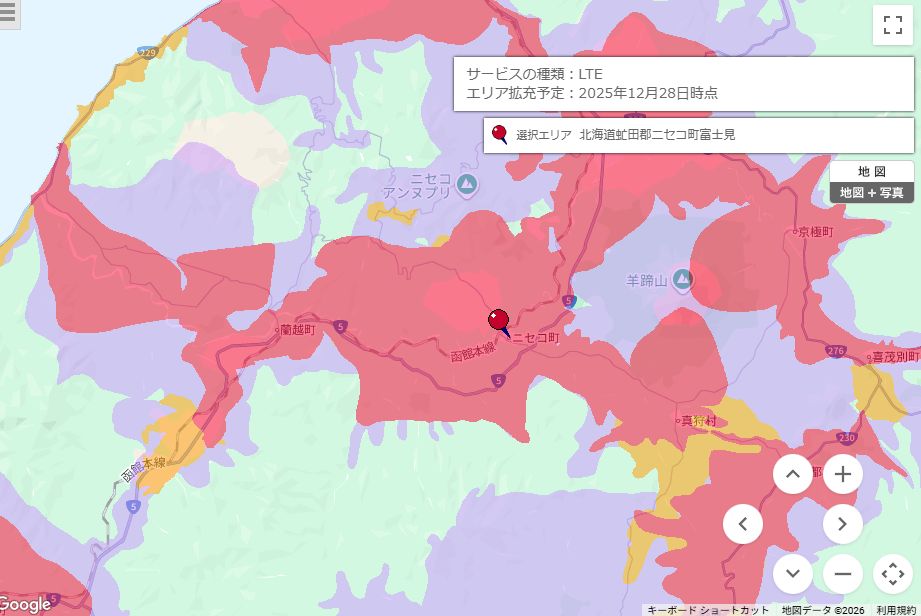
Docomo network coverage across Hokkaido's mountains and rural areas, including ski resorts such as Niseko and Furano
Docomo operates the densest tower network across Hokkaido's mountains and remote areas, including around the ski resorts.
  • Docomo: Japan's oldest carrier has the most extensive base station network in mountains, national parks and rural areas. Even around Niseko, Furano and Shiretoko the connection generally stays stable, which is why Docomo is widely regarded as the most reliable network in Hokkaido.
  • au (KDDI): Solid in cities like Sapporo, Asahikawa and Hakodate, but more prone to dead zones once you head into the mountains or countryside. If your route leaves the cities, Docomo is the safer bet.
  • SoftBank: Good metro coverage, but likewise less consistent than Docomo in remote areas.

So for anyone travelling beyond the cities, an eSIM running on Japan's Docomo network is the safest choice.

eSIM, physical SIM card or pocket WiFi?

These three options get mixed up constantly, but they suit different travellers:

  • eSIM (right for most travellers): No card swap, no pickup counter - buy online, scan a QR code, switch over after landing and you're connected. Ideal for solo travellers and couples with an eSIM-capable phone.
  • Physical SIM card: Makes sense if your phone doesn't support eSIM or you simply prefer a card. The downside is removing your own SIM and the risk of losing it.
  • Pocket WiFi router: One device covers several people at once with a large data allowance - the practical answer for families and groups (more below).

Global roaming eSIM vs. a local Japanese line: what's the difference?

The biggest difference between global eSIM providers and the CDJapan eSIM (which connects directly to a Japanese carrier) usually comes down to latency.

If you've used a global eSIM like Airalo, you may have hit this: full signal bars, yet everything loads slowly. That's typically roaming latency at work.
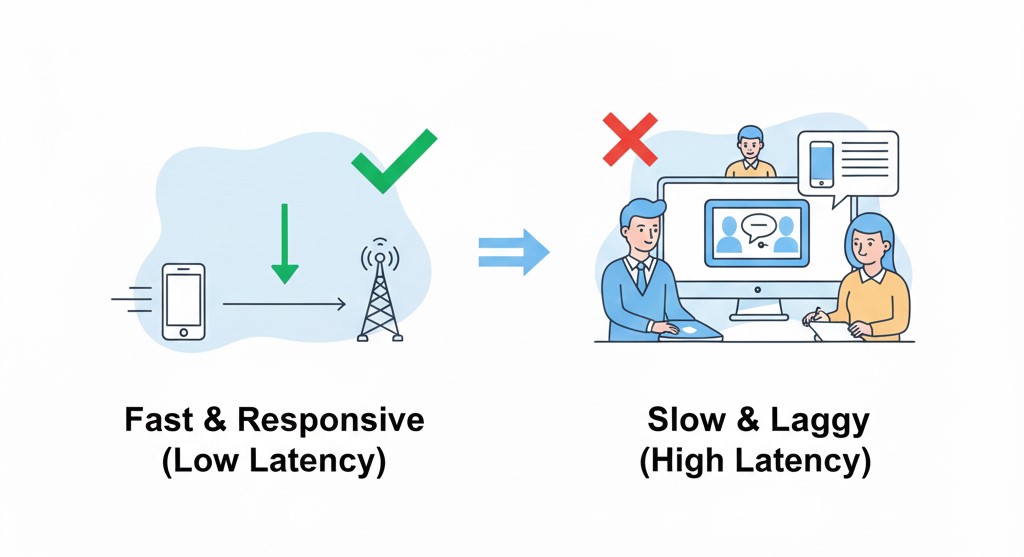
Data routing compared: a local Japanese eSIM connecting straight to Docomo versus a global roaming eSIM routed through overseas servers
A local eSIM connects straight into Docomo. Global roaming sends your data out to overseas servers and back again - and that detour costs time.
  • How global eSIMs work: Many overseas providers route your data through servers in another country (Hong Kong or Singapore, for example) before sending it on to Japan. That detour causes video buffering and sluggish apps - and it's especially noticeable in rural Hokkaido, where signal is already tighter.
  • How the CDJapan eSIM works: A direct connection to Japan's Docomo network, with no international round trip. Speed and responsiveness end up close to what local users in Japan experience.

How much data do you need in Hokkaido?

Even light data users tend to burn through more than expected on a Hokkaido trip. See which one you are:

  • Road trippers: Navigation running all day, plus traffic and parking lookups - out on remote roads, that's partly a safety margin.
  • Skiers and snowboarders: A single 4K powder-day clip (JAPOW) posted to Instagram or TikTok can eat several hundred MB, and resort hotel WiFi often slows to a crawl in the evening.
  • Photographers and sightseers: Furano's flower fields, drift ice off Shiretoko, the Hakodate night view - uploading as you go adds up fast.
  • Long stays and digital nomads: Remote work and video calls need both long validity and generous data.

The rule of thumb: budget generously for Hokkaido. For road trips and ski trips, 30GB and up means you won't spend the second half of the trip rationing.

Recommended Hokkaido eSIM plans (CDJapan, Docomo network)

All plans run on Japan's Docomo network - just pick by trip length:

DataValidityPriceBest for
30GBPOPULAR 8 days ¥3,200 Short, packed itineraries - enough even if you upload video daily.
50GB 16 days ¥3,900 Two-week road trips covering several regions of Hokkaido.
50GB 31 days ¥4,900 Digital nomads working remotely, or extended stays.
135GB 91 days ¥10,800 Long stays and full winter seasons.

* The 30GB plan works out to roughly ¥106 per GB - strong value for a direct connection on Docomo. If you're on a shorter trip and would rather not think about data at all, unlimited plans are also available.

See all CDJapan eSIM plans for Hokkaido →

Families and groups: pocket WiFi is usually better value

If you're heading to Hokkaido with family or a group of friends, consider renting a pocket WiFi router. One device keeps everyone online at once, with wide coverage and a large data allowance - split across the group it often costs less than buying individual eSIMs, and it's more practical when phones, tablets and laptops all need to be connected.

Setting up your eSIM in about a minute

With an eSIM there's no airport queue, no swapping physical cards, and no risk of misplacing your own SIM:

  1. Buy online: Once your order is complete, the setup QR code arrives by email within minutes.
  2. Scan the QR code: Scan it with your phone camera before you leave home to install the eSIM.
  3. Connect on arrival: After landing at New Chitose Airport, switch your mobile data line and you're straight onto the Docomo network.

Hokkaido connectivity FAQ

Which carrier should I choose for an eSIM in Hokkaido?

If your itinerary leaves the cities - road trips, ski resorts, remote sights - choose an eSIM on Japan's Docomo network. It has the most stable coverage in mountains and rural areas.

How good is au (KDDI) outside the cities in Hokkaido?

au performs well in Sapporo, Asahikawa and Hakodate, but dead zones are more likely in the mountains and countryside than with Docomo. If rural stability matters to you, Docomo is the safer choice.

Is a global eSIM like Airalo good enough for Hokkaido?

Usually fine in the cities. Because the data is routed overseas, though, delays are more likely in rural and mountainous areas. If connection quality matters, choose an eSIM on a local Japanese line.

eSIM or pocket WiFi - which should I get?

For solo travellers and couples with an eSIM-capable phone, an eSIM is the most convenient. For families, groups and multiple devices at once, pocket WiFi is usually better value.

How much data should I buy for a Hokkaido trip?

For a typical eight-day trip, 30GB is usually enough. From two weeks, or if you upload video regularly, go for 50GB. For long stays and full winter seasons, consider the 135GB / 91-day plan.

The bottom line: connectivity isn't where you want to cut costs

A smooth Hokkaido trip depends on more than your route and your gear - a reliable connection matters just as much. Sort it out before you fly by choosing a local Docomo line and allowing plenty of data, and navigating, sharing from the slopes and reaching remote spots all get noticeably easier.

Get your CDJapan Hokkaido eSIM →


Find the best eSIM Japan plans

eSIM UNLIMITED data 31 days

UNLIMITED data

Period:31 days

¥7900

Network : docomo

eSIM UNLIMITED data 5 days

UNLIMITED data

Period:5 days

¥2800

Network : docomo

eSIM 135GB / 91 days

135GB

Period:91 days

¥10800

Network : docomo

eSIM UNLIMITED data 15 days

UNLIMITED data

Period:15 days

¥6300

Network : docomo

See all Plans

Related Articles

See All Articles